Longlisted for the National Book Award
An Oprah Daily “Best New Book” and “Riveting Nonfiction and Memoir You Need to Read” * A New York Times “New Book to Read” * A The New Yorker “Best Book out now” * An Esquire “Best Book (so far)” * A Zibby Mag “Most Anticipated Book” * An Elle “Best Book” * A Washington Post “Book to Read this Summer” * Publishers Weekly “Top 10 Memoir and Biography” * A San Francisco Chronicle “New Book to Cozy Up With” * A Publishers Weekly “Memoirs & Biographies: Top 10” * The Millions “Most Anticipated” * An Electric Lit “Books By Women of Color to Read” * An Amazon Editors “Best Book of the Month”
“We have more Native stories now, but we have not heard one like this. Whiskey Tender is unexpected and propulsive, indeed tender, but also bold, and beautifully told, like a drink you didn’t know you were thirsty for. This book, never anything less than mesmerizing, is full of family stories and vital Native history. It pulses and it aches, and it lifts, consistently. It threads together so much truth by the time we are done, what has been woven together equals a kind of completeness from brokenness, and a hope from knowing love and loss and love again by naming it so.” — Tommy Orange, National Bestselling Author of There There
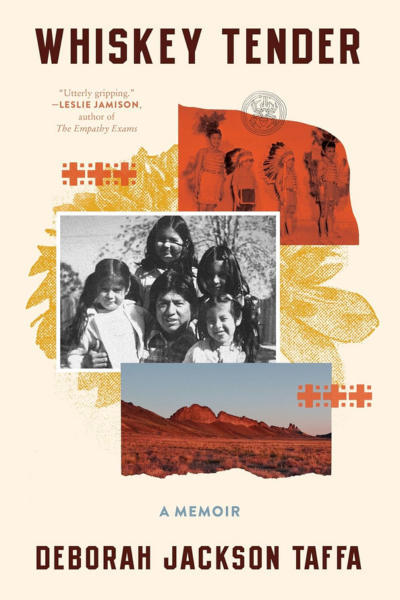
Reminiscent of the works of Mary Karr and Terese Marie Mailhot, a memoir of family and survival, coming-of-age on and off the reservation, and of the frictions between mainstream American culture and Native inheritance; assimilation and reverence for tradition.
Deborah Jackson Taffa was raised to believe that some sacrifices were necessary to achieve a better life. Her grandparents—citizens of the Quechan Nation and Laguna Pueblo tribe—were sent to Indian boarding schools run by white missionaries, while her parents were encouraged to take part in governmental job training off the reservation. Assimilation meant relocation, but as Taffa matured into adulthood, she began to question the promise handed down by her elders and by American society: that if she gave up her culture, her land, and her traditions, she would not only be accepted, but would be able to achieve the “American Dream.”
Whiskey Tender traces how a mixed tribe native girl—born on the California Yuma reservation and raised in Navajo territory in New Mexico—comes to her own interpretation of identity, despite her parent’s desires for her to transcend the class and “Indian” status of her birth through education, and despite the Quechan tribe’s particular traditions and beliefs regarding oral and recorded histories. Taffa’s childhood memories unspool into meditations on tribal identity, the rampant criminalization of Native men, governmental assimilation policies, the Red Power movement, and the negotiation between belonging and resisting systemic oppression. Pan-Indian, as well as specific tribal histories and myths, blend with stories of a 1970s and 1980s childhood spent on and off the reservation.
Taffa offers a sharp and thought-provoking historical analysis laced with humor and heart. As she reflects on her past and present—the promise of assimilation and the many betrayals her family has suffered, both personal and historical; trauma passed down through generations—she reminds us of how the cultural narratives of her ancestors have been excluded from the central mythologies and structures of the “melting pot” of America, revealing all that is sacrificed for the promise of acceptance.



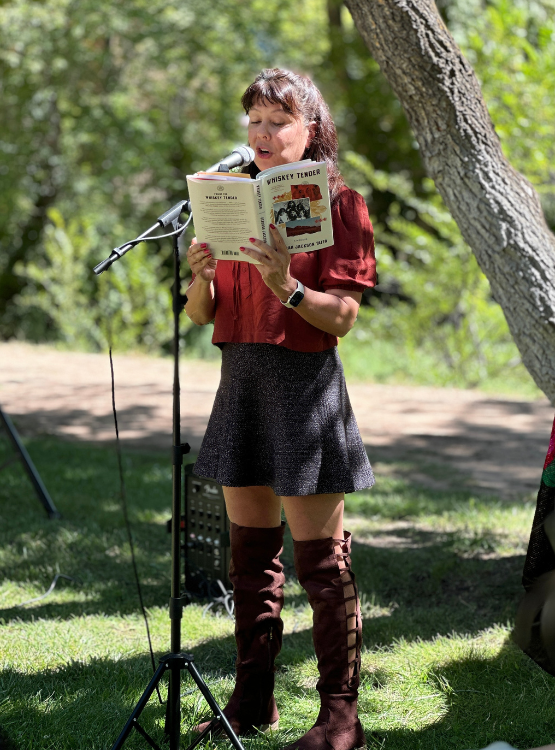


 “Deborah Taffa was amazing! We appreciated how personalized she made the lecture and her willingness to be vulnerable throughout her talk. Ms. Taffa mingled with attendees at various points throughout the day, which was perfect. Ms. Taffa was warm, flexible, accommodating, approachable, and very prepared for her various talks/engagements.” — Johns Hopkins University School of Education, 2025